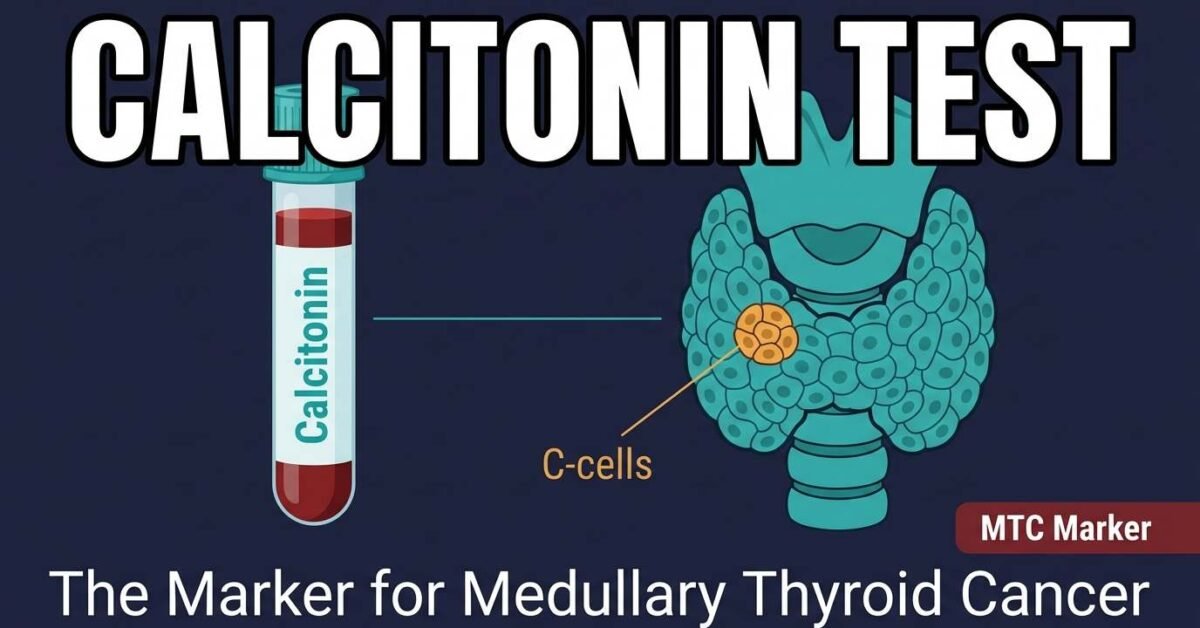
The calcitonin test measures a hormone produced by a specific type of thyroid cell called a parafollicular C-cell. Unlike TSH, T3, and T4, which assess general thyroid function, calcitonin serves a very targeted purpose: it is the primary marker for medullary thyroid carcinoma (MTC), a cancer that arises from these same C-cells.
What Calcitonin Is
Calcitonin is a 32-amino-acid peptide hormone produced by the C-cells (parafollicular cells) of the thyroid gland. Its physiological role in calcium regulation is minor in adults. Its clinical importance is almost entirely as a tumour marker: medullary thyroid cancer cells produce calcitonin, often in large amounts, making it a reliable indicator of the disease.
Normal Calcitonin Levels
| Category | Typical reference range |
|---|---|
| Normal | <10 pg/mL (varies by assay and gender) |
| Borderline / mildly elevated | 10–100 pg/mL |
| Strongly suggestive of MTC | >100 pg/mL |
Levels above 100 pg/mL in a patient with a thyroid nodule carry a high positive predictive value for medullary thyroid cancer. However, mild elevations can be caused by C-cell hyperplasia (a precursor condition), chronic kidney disease, proton pump inhibitor use, heavy smoking, and other non-malignant conditions.
Medullary Thyroid Cancer and Calcitonin
MTC accounts for approximately 3 to 5 percent of thyroid cancers. Unlike papillary and follicular cancers, which arise from follicular cells, MTC originates from C-cells and behaves differently. It does not respond to radioactive iodine therapy and is not detected by thyroglobulin monitoring.
Calcitonin is both a screening and monitoring marker for MTC. Before surgery, elevated calcitonin can prompt surgical planning for a more extensive procedure. After surgery, serial calcitonin measurements detect recurrence.
Approximately 25 percent of MTC cases are hereditary, associated with MEN2 (Multiple Endocrine Neoplasia type 2) syndrome. Genetic testing for RET mutations is recommended when MTC is diagnosed or suspected.
Should Calcitonin Be Routinely Tested?
This is one of the few areas where European and American guidelines disagree:
- European Thyroid Association and most European guidelines recommend routine serum calcitonin measurement in all patients undergoing evaluation of thyroid nodules
- American Thyroid Association does not mandate routine screening but states it may be considered, particularly with a family history of MTC or MEN2
The argument for routine testing is that identifying MTC before surgery allows more appropriate surgical planning. The argument against is that false positives from mildly elevated calcitonin lead to unnecessary anxiety and procedures.
If your doctor ordered a calcitonin test alongside your thyroid workup, it does not mean they suspect cancer. Some centres include it as routine screening for all nodules. A normal result is reassuring, and a mildly elevated result warrants further investigation rather than alarm.
Stimulated calcitonin testing (calcium or pentagastrin) increases sensitivity for MTC detection but is not universally available. Baseline calcitonin above 100 pg/mL with a thyroid nodule should prompt surgical referral regardless of the TI-RADS score, as MTC ultrasonographic features overlap substantially with benign nodules.
Related Resources
See our guides to TSH, T3, and T4 testing, thyroglobulin, and the TI-RADS calculator for nodule risk assessment.
Frequently Asked Questions
What is calcitonin?
Calcitonin is a hormone produced by the parafollicular C-cells of the thyroid gland. It plays a minor role in calcium regulation. Its clinical importance lies in its use as a tumour marker for medullary thyroid carcinoma (MTC), which arises from these same C-cells.
What does an elevated calcitonin level mean?
An elevated serum calcitonin level raises suspicion for medullary thyroid carcinoma. Levels above 100 pg/mL are strongly suggestive of MTC. However, mildly elevated calcitonin can also be caused by C-cell hyperplasia, chronic kidney disease, proton pump inhibitors, and other non-malignant conditions.
Is calcitonin routinely tested for thyroid nodules?
Practice varies. European guidelines generally recommend routine calcitonin measurement when evaluating thyroid nodules. American guidelines do not mandate routine screening but suggest considering it, particularly when a nodule has features suspicious for medullary cancer or when there is a family history.
