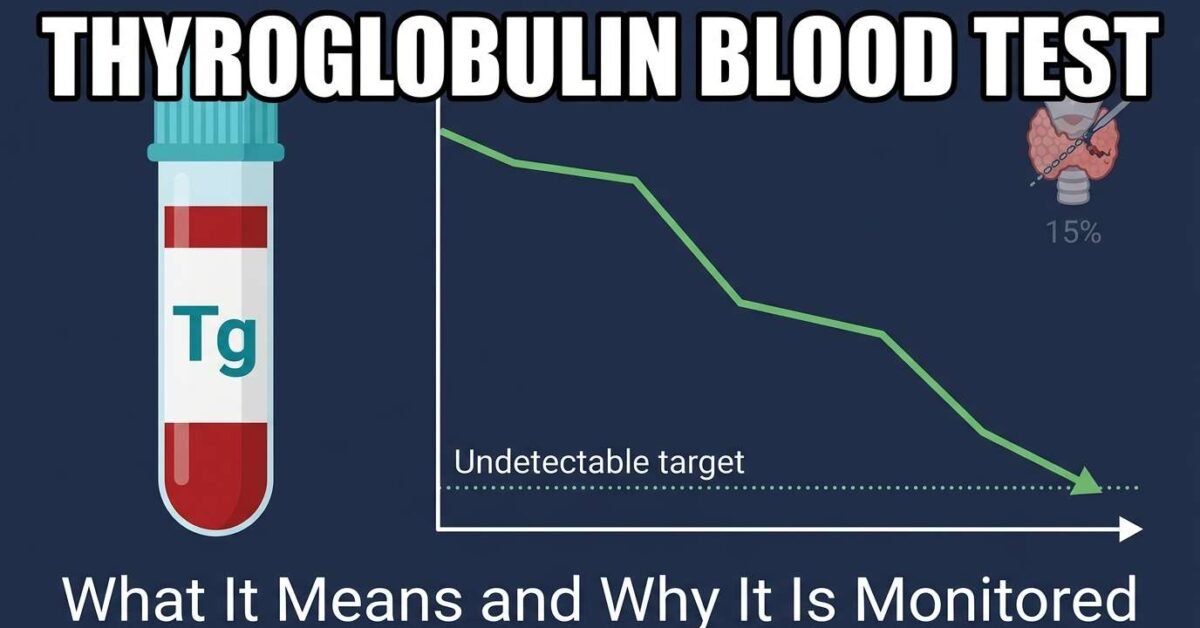
Thyroglobulin is a protein made exclusively by thyroid cells. It serves as the building block for thyroid hormones T3 and T4. Because only thyroid tissue produces it, the thyroglobulin blood test has a very specific role in medicine: it is the primary tumour marker for monitoring thyroid cancer after treatment.
What the Thyroglobulin Test Measures
The test measures the concentration of thyroglobulin protein in the blood. In someone with an intact, healthy thyroid, thyroglobulin is normally present at low levels (roughly 3 to 40 ng/mL). The test becomes clinically powerful after total thyroidectomy, when there should be no thyroid tissue left to produce it.
Thyroglobulin as a Cancer Marker
After a patient undergoes total thyroidectomy and radioactive iodine therapy for differentiated thyroid cancer (papillary or follicular), thyroglobulin should become undetectable in the blood. The level is monitored at regular intervals afterward:
- Undetectable Tg (below 0.2 ng/mL) — no evidence of residual or recurrent disease
- Detectable or rising Tg — raises suspicion for residual, recurrent, or metastatic thyroid cancer and triggers further imaging
- Stimulated Tg testing — thyroglobulin measured after TSH stimulation (either by withholding thyroid hormone or by injecting recombinant TSH) provides a more sensitive detection of residual disease
Anti-Thyroglobulin Antibodies
Some patients produce antibodies against thyroglobulin (TgAb), which can interfere with the accuracy of the thyroglobulin measurement. When TgAb is present, it may falsely lower the measured Tg level in immunometric assays, masking residual disease. For this reason, TgAb is always measured alongside thyroglobulin. If TgAb is positive, the trend in antibody levels over time is used as a surrogate marker instead.
Thyroglobulin in People Without Cancer
In patients who have not had thyroid cancer, an elevated thyroglobulin level is not specific for malignancy. Thyroglobulin can be elevated in goiter, thyroiditis, Graves disease, and benign nodular thyroid disease. The test is not used for cancer screening in the general population.
If you are monitoring thyroglobulin after thyroid cancer treatment, an undetectable level is the goal. A single elevated result does not necessarily mean recurrence — trends over multiple measurements are more meaningful. Ask your doctor to explain your trajectory.
Always order TgAb alongside Tg. In TgAb-positive patients, a falling TgAb trend is generally reassuring and a rising trend warrants imaging. Consider using mass spectrometry-based Tg assays for TgAb-positive patients where available, as these are less susceptible to antibody interference.
Related Tests and Tools
Thyroglobulin is one of several blood tests used in thyroid care. See our guides to thyroid function tests (TSH, T3, T4), anti-TPO antibodies, and the calcitonin test. For nodule risk assessment before any surgery, use the TI-RADS calculator.
Frequently Asked Questions
What is thyroglobulin?
Thyroglobulin (Tg) is a protein produced exclusively by thyroid cells, both normal and cancerous. It is a precursor to thyroid hormones T3 and T4. Because only thyroid tissue makes it, the thyroglobulin blood test is used primarily as a tumour marker after thyroid cancer treatment.
Why is thyroglobulin measured after thyroidectomy?
After total thyroidectomy for thyroid cancer, there should be no remaining thyroid tissue and therefore no thyroglobulin production. A detectable or rising thyroglobulin level after surgery suggests residual or recurrent thyroid cancer and prompts further investigation.
What is a normal thyroglobulin level?
In people with an intact thyroid, normal thyroglobulin ranges from approximately 3 to 40 ng/mL. After total thyroidectomy for cancer, the target is an undetectable level, typically below 0.2 ng/mL, which indicates no evidence of residual disease.
Can thyroglobulin be elevated without cancer?
Yes. Thyroglobulin can be elevated in any condition that increases thyroid cell activity, including goiter, thyroiditis, Graves disease, and benign nodules. Elevated thyroglobulin in someone with an intact thyroid is not specific for cancer.
