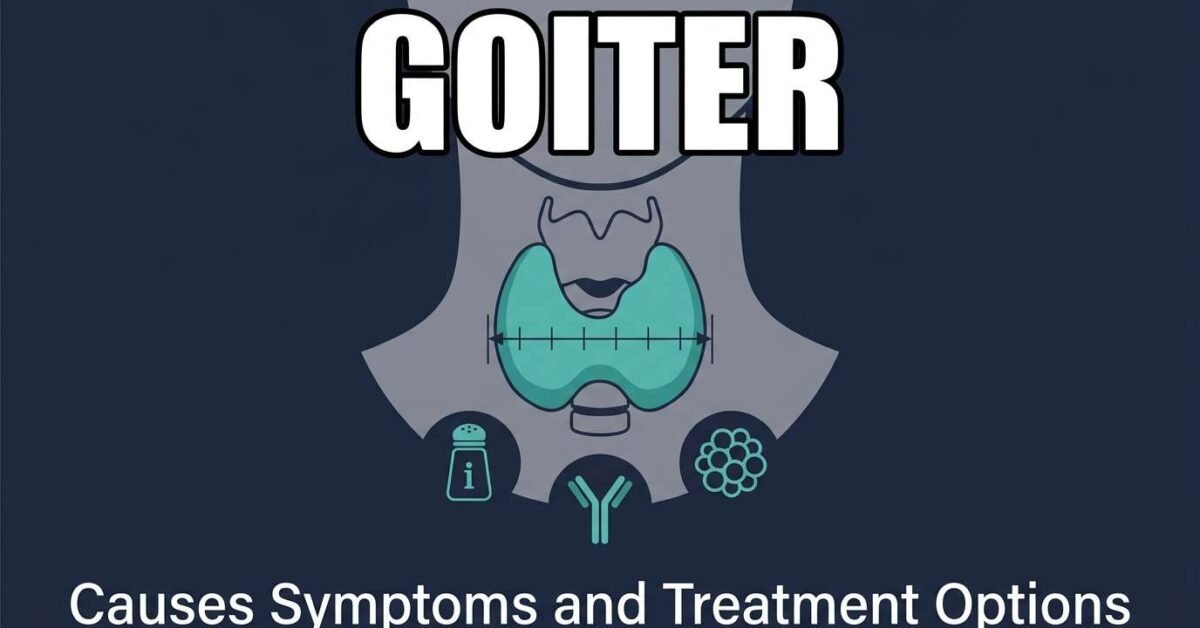
A goiter simply means an enlarged thyroid gland. It is not a disease itself but a finding that can result from many different conditions. Goiters range from barely noticeable to visibly prominent, and from completely asymptomatic to causing difficulty swallowing or breathing. This guide covers the main causes, when treatment is needed, and the options available.
What Causes a Goiter
Iodine Deficiency
Iodine deficiency is the leading cause of goiter worldwide, affecting approximately 2 billion people. When the thyroid lacks sufficient iodine to produce hormones, TSH rises to stimulate the gland to work harder, causing it to grow. In many developed countries, iodine fortification of salt has made this uncommon, but it remains the dominant cause in parts of Asia, Africa, and South America.
Hashimoto Thyroiditis
Hashimoto thyroiditis is the most common cause of goiter in iodine-sufficient regions. Chronic autoimmune inflammation causes the gland to enlarge initially, though in later stages the gland may become atrophic as functioning tissue is destroyed. The gland typically appears heterogeneous and hypoechoic on ultrasound.
Graves Disease
Graves disease causes diffuse, symmetrical thyroid enlargement driven by TSH receptor antibodies that continuously stimulate gland growth and hormone overproduction.
Multinodular Goiter
Over time, particularly with age, the thyroid can develop multiple nodules that collectively enlarge the gland. Multinodular goiter is the most common form in older adults in iodine-sufficient populations. Each individual nodule within a multinodular goiter should be assessed with TI-RADS because the presence of goiter does not exclude malignancy in a specific nodule.
Other Causes
- Thyroiditis — subacute thyroiditis can cause temporary painful enlargement
- Thyroid cancer — rarely presents as goiter, but cancer can occur within a goiter
- Medications — lithium and amiodarone can cause thyroid enlargement
- Pregnancy — mild thyroid enlargement during pregnancy is physiological
Goiter Symptoms
Small goiters often produce no symptoms at all and are discovered during a routine physical examination or imaging for another reason. As the gland grows, symptoms may include:
- A visible swelling or fullness at the base of the front of the neck
- A sensation of tightness or pressure in the throat
- Difficulty swallowing (dysphagia), particularly with solid foods
- Difficulty breathing, especially when lying flat or with arms raised overhead
- Hoarseness, if the enlarged gland compresses the recurrent laryngeal nerve
- Coughing or throat clearing not explained by other causes
If the goiter is associated with thyroid dysfunction, symptoms of hypothyroidism or hyperthyroidism will also be present.
Diagnosis
Goiter is assessed with three complementary approaches:
- Thyroid ultrasound — measures the gland dimensions, calculates total volume, and identifies any nodules
- Thyroid function tests — TSH, free T4, and free T3 determine whether the gland is over- or underproducing hormone
- Thyroid antibodies — anti-TPO and TRAb help identify the underlying autoimmune cause
What Volume Is Considered a Goiter
Normal thyroid volume is up to approximately 15 mL in women and 18 mL in men. A gland exceeding approximately 20 mL in women or 25 mL in men is generally considered enlarged. Use the thyroid volume calculator to check your measurements, and read our detailed guide to thyroid goiter volume thresholds.
Goiter Treatment Options
| Situation | Treatment |
|---|---|
| Small, asymptomatic, euthyroid | Monitoring with periodic ultrasound |
| Iodine deficiency | Iodine supplementation (may shrink the goiter) |
| Hypothyroidism (Hashimoto) | Levothyroxine replacement |
| Hyperthyroidism (Graves) | Anti-thyroid medication, RAI, or surgery |
| Compressive symptoms | Surgery (lobectomy or thyroidectomy) |
| Suspicious nodule within goiter | Biopsy ± surgery based on TI-RADS score |
| Toxic multinodular goiter | RAI or surgery |
A goiter does not automatically mean you need surgery or that something serious is wrong. Many goiters are stable, require no treatment, and are simply monitored. The key questions are: is your thyroid function normal, are any nodules within the goiter suspicious, and is the goiter causing symptoms?
In multinodular goiter, apply TI-RADS to each discrete nodule individually rather than assessing the goiter as a whole. A goiter background does not change the scoring criteria or biopsy thresholds. Retrosternal extension warrants CT assessment for surgical planning, as ultrasound underestimates inferior extent when the gland extends below the thoracic inlet.
Monitoring a Goiter Over Time
Serial ultrasound measurements track volume change over months to years. A volume increase of more than 20 percent between examinations is considered significant. Consistent measurement technique is important because small differences in probe positioning can affect the calculated volume. See our guide to normal thyroid size for reference ranges.
Frequently Asked Questions
What is a goiter?
A goiter is an enlargement of the thyroid gland beyond the normal size range. It can be diffuse (the entire gland is uniformly enlarged) or nodular (one or more discrete nodules cause the enlargement). Goiter is a description of size, not a specific diagnosis.
What causes a goiter?
The most common cause worldwide is iodine deficiency. In iodine-sufficient countries, the leading causes are autoimmune thyroid disease (Hashimoto thyroiditis and Graves disease), multinodular goiter, and thyroiditis. Less common causes include thyroid cancer, lithium use, and certain genetic conditions.
What are the symptoms of a goiter?
Many goiters cause no symptoms. Larger goiters can produce a visible swelling in the front of the neck, a sensation of pressure or fullness in the throat, difficulty swallowing, difficulty breathing (especially when lying flat), and occasionally hoarseness.
Does a goiter need treatment?
Not always. Small, asymptomatic goiters with normal thyroid function are often monitored without intervention. Treatment is considered when the goiter causes compressive symptoms, when thyroid function is abnormal, when cancer is suspected in a nodule within the goiter, or for cosmetic reasons.
What volume is considered a goiter?
Total thyroid volume above approximately 20 mL in women or 25 mL in men is generally considered enlarged. Values between the normal upper limit and these thresholds are borderline. You can check your own measurements with the thyroid volume calculator.
