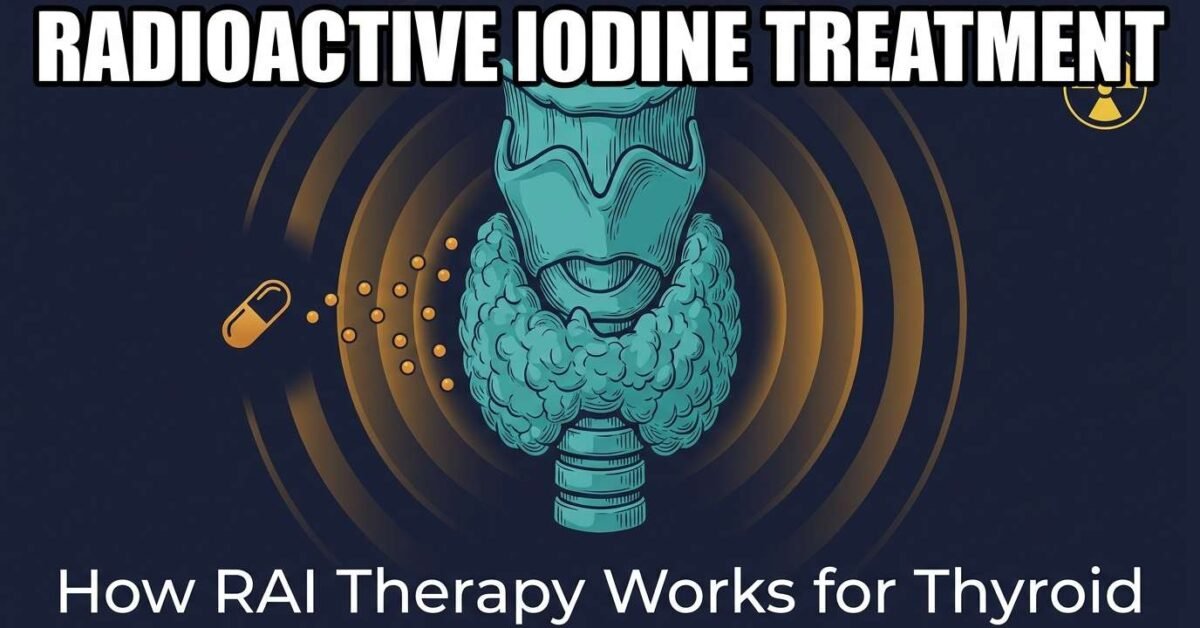
Radioactive iodine (RAI) therapy is one of the most targeted treatments in all of medicine. It exploits the thyroid’s unique ability to concentrate iodine: by giving a radioactive form (I-131), the radiation is delivered directly to thyroid cells while the rest of the body receives minimal exposure. This guide explains how it works, when it is used, and what to expect.
How Radioactive Iodine Works
The thyroid gland is the only tissue in the body that actively absorbs and concentrates iodine, using it to manufacture T3 and T4. When radioactive iodine (I-131) is administered, thyroid cells absorb it just as they would normal iodine. Once inside the cell, the radioactive iodine emits beta radiation that destroys the cell from within.
This selectivity is what makes RAI therapy effective: it destroys thyroid tissue wherever it exists in the body, including normal remnant tissue after surgery and metastatic deposits of differentiated thyroid cancer, while leaving other organs largely unaffected.
When RAI Is Used
After Thyroid Cancer Surgery
The most common use is remnant ablation after total thyroidectomy for papillary or follicular thyroid cancer. Even the most skilled surgeon leaves behind trace amounts of thyroid tissue. RAI destroys this remnant, which serves two purposes: it reduces the already small risk of local recurrence, and it makes subsequent thyroglobulin monitoring more reliable (with no normal tissue left, any detectable thyroglobulin suggests cancer).
Not all thyroid cancer patients need RAI. Low-risk papillary cancers under 1 to 2 cm, confined to the thyroid with no aggressive features, may be managed with surgery alone.
For Hyperthyroidism
RAI is also used to treat Graves disease and toxic thyroid nodules. In this setting, I-131 destroys the overactive thyroid tissue, resolving hyperthyroidism. The trade-off is that most patients develop hypothyroidism afterward and require lifelong levothyroxine replacement.
Preparation
- Low-iodine diet — for 1 to 2 weeks before treatment, to deplete iodine stores and maximise radioactive iodine uptake
- TSH elevation — either by withdrawing thyroid hormone for several weeks (causing temporary hypothyroidism) or by injecting recombinant TSH (Thyrogen), which avoids the withdrawal symptoms
- Pregnancy test — RAI is absolutely contraindicated in pregnancy
- Stopping interfering medications — amiodarone, iodine supplements, and recent CT contrast can reduce uptake
The Treatment Itself
RAI is administered as a single oral dose, either a capsule or liquid, in a nuclear medicine department. Low-dose ablation is often outpatient. Higher doses for metastatic disease may require a brief hospital stay in an isolation room until radiation levels fall to safe limits.
Isolation Precautions
After receiving I-131, you emit low levels of radiation for several days. Standard precautions include sleeping separately, maintaining distance from pregnant women and small children, using separate utensils, and flushing the toilet twice. Specific duration and precautions depend on the dose and are provided by your nuclear medicine team.
Side Effects
- Short-term: neck tenderness or swelling, nausea, dry mouth, taste changes, salivary gland swelling
- Long-term risks: small increased risk of salivary gland dysfunction, dental issues from reduced saliva, and a very small increased risk of secondary malignancies (leukaemia, bladder cancer) with high cumulative doses
- Fertility: RAI can temporarily affect sperm production and ovarian function. Conception should be delayed for at least 6 to 12 months after treatment. Discuss fertility preservation before treatment if relevant.
What RAI Cannot Treat
RAI is effective only for differentiated thyroid cancers that retain the ability to take up iodine. Medullary thyroid cancer arises from C-cells that do not concentrate iodine. Anaplastic thyroid cancer has lost its differentiated characteristics and does not take up iodine. Neither responds to RAI therapy.
If RAI has been recommended after your surgery, ask your doctor about the specific dose, whether Thyrogen injection is available to avoid thyroid hormone withdrawal, and what the expected isolation period is. Most patients tolerate RAI well, and the short-term inconvenience is balanced by meaningful long-term risk reduction.
Frequently Asked Questions
What is radioactive iodine treatment?
Radioactive iodine (I-131) therapy uses a radioactive form of iodine that is selectively taken up by thyroid cells. Because thyroid cells are the only cells in the body that concentrate iodine, the radiation destroys thyroid tissue while sparing other organs.
Why is radioactive iodine given after thyroid cancer surgery?
After total thyroidectomy for differentiated thyroid cancer, small amounts of thyroid tissue often remain. RAI ablation destroys this remnant tissue and any microscopic cancer deposits, reducing the risk of recurrence and enabling clean thyroglobulin monitoring.
What are the side effects of radioactive iodine?
Common short-term side effects include neck tenderness, nausea, dry mouth, altered taste, and temporary salivary gland swelling. Long-term risks include a small increase in the risk of secondary cancers and potential effects on fertility, which should be discussed before treatment.
Does radioactive iodine work for all thyroid cancers?
No. RAI is effective only for differentiated thyroid cancers (papillary and follicular) because these retain the ability to take up iodine. Medullary and anaplastic thyroid cancers do not concentrate iodine and are not treated with RAI.
